
STōN-WoLF
High-speed. Built in Prague. Open source.
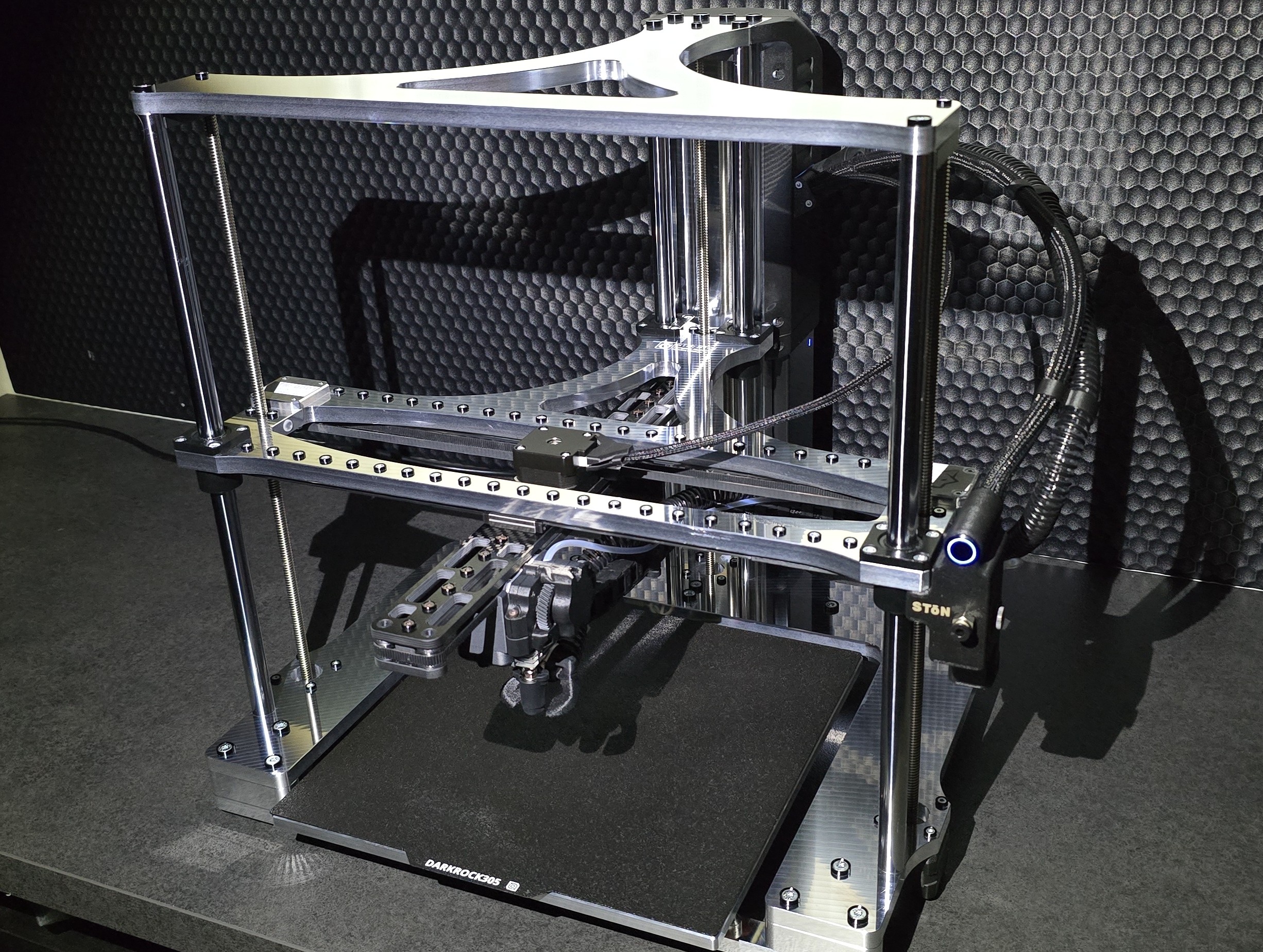
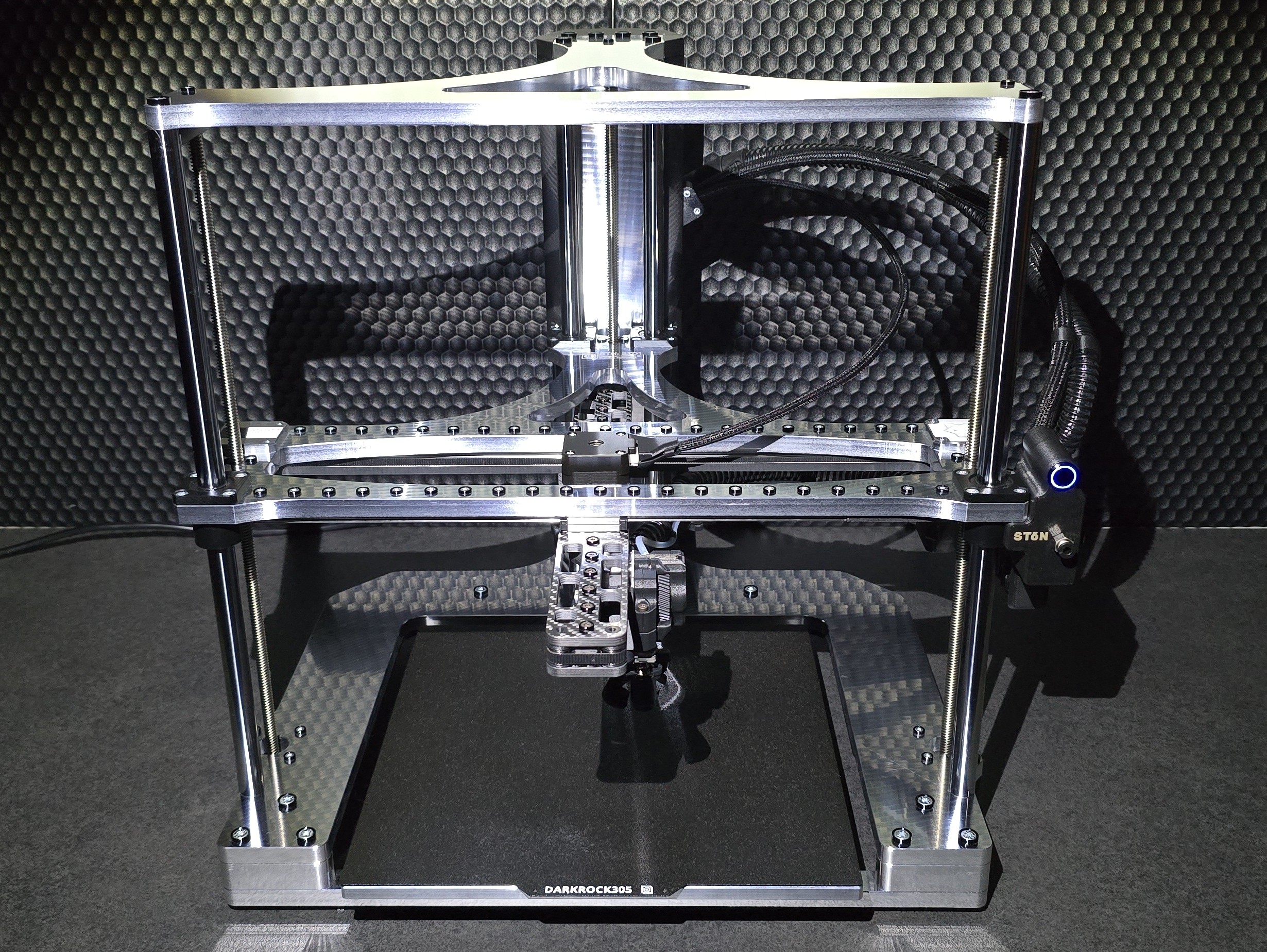
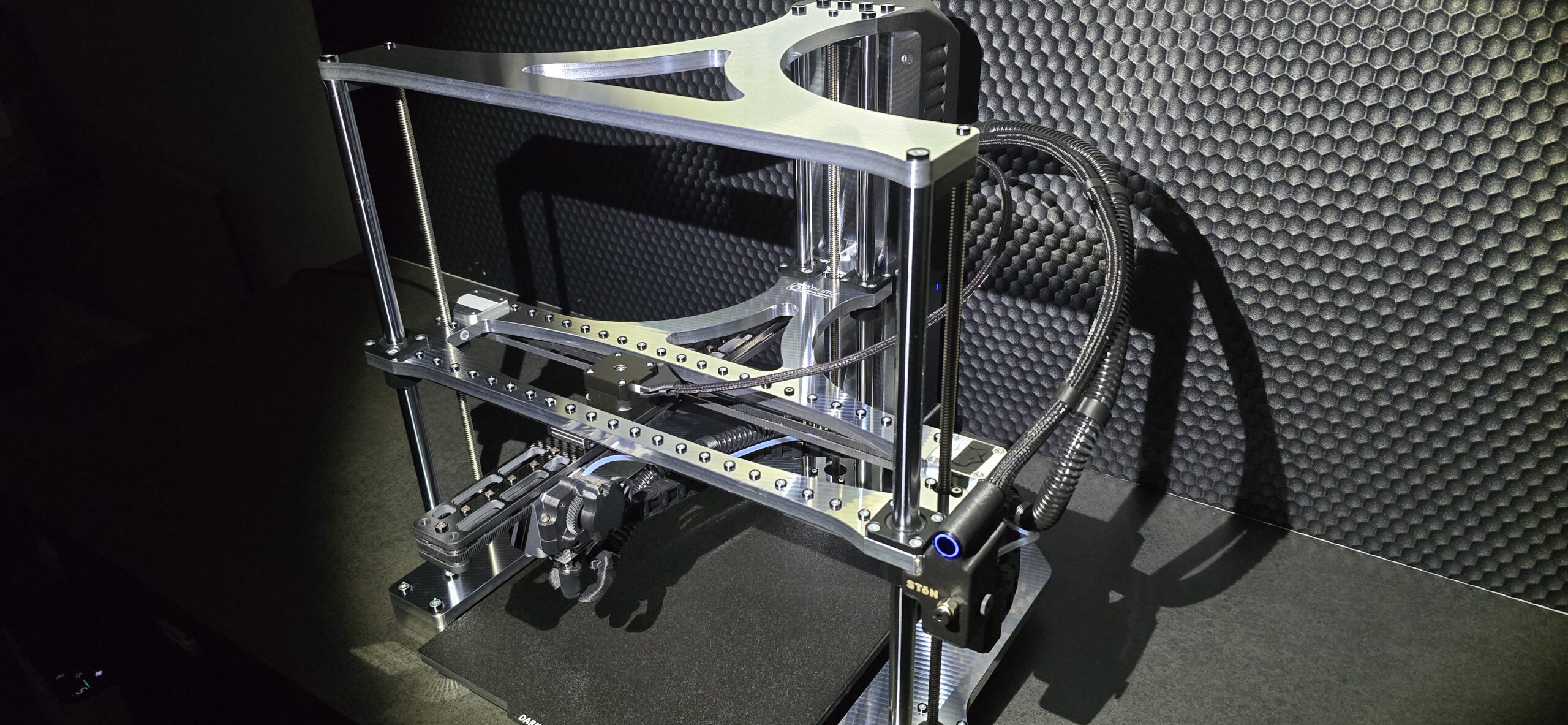
Cartesian flying-gantry 3D printer kit with 48V motion, CNC aluminum frame, and Klipper + Mainsail pre-installed.
Built and assembled one at a time. Every unit has a build number and is serviceable by the person who built it.
QUICK OVERVIEW
Build volume: 300 x 300 x 285 mm
Optional Z600: 300 x 300 x 600 mm (made to order, 4–6 weeks)
Travel speed: up to 1500 mm/s
Print speed: 300–600 mm/s
Acceleration: up to 50,000 mm/s² (hardware-limited)
48V motion system
Raspberry Pi CM5 with Klipper + Mainsail pre-installed
WHAT THIS MACHINE IS
The STōN-WoLF removes the usual tradeoff between ease of use and performance.
It ships ready to print from your phone or local browser. No SSH, no internet, no cloud, no terminal, no Linux setup required.
Nothing is locked down. Advanced features can be enabled or disabled at any time.
PERFORMANCE
Travel speed: up to 1500 mm/s
Print speed: 300–600 mm/s depending on material
Acceleration: up to 50,000 mm/s²
Built-in motion safety automatically limits acceleration at high speeds:
Above 1000 mm/s → capped at 25,000 mm/s²
Below 1000 mm/s → full performance allowed
This is enforced at firmware level (motion planner), not slicer or macros.
FRAME & STRUCTURE
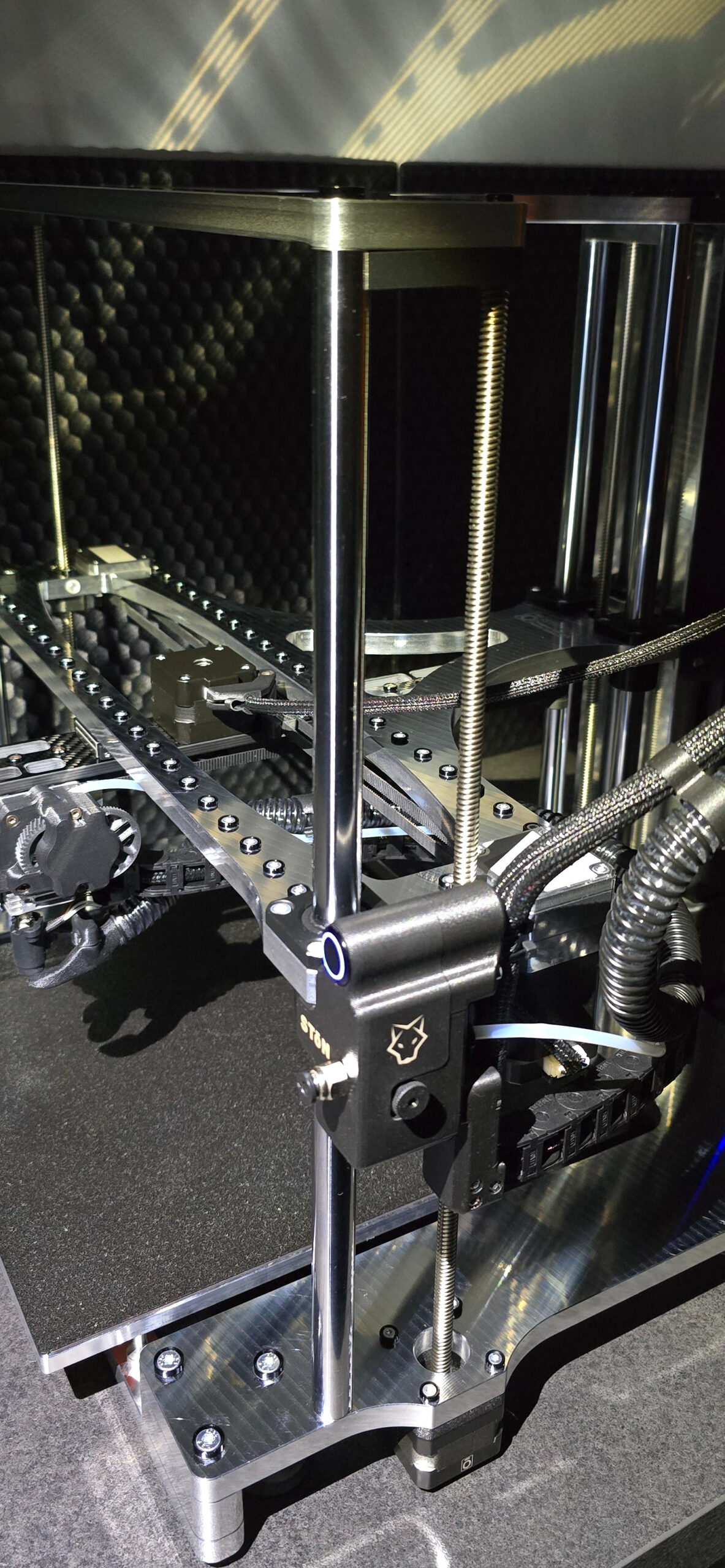
12mm CNC-machined aluminum frame plates (Czech manufactured)
18mm carbon fiber composite Y-gantry
Cartesian flying gantry with fixed bed
80×20mm rear structural beam
Compact footprint (fits narrow desks, 400mm depth)
Machine weight: ~20 kg
MOTION SYSTEM
48V industrial-grade XY motors
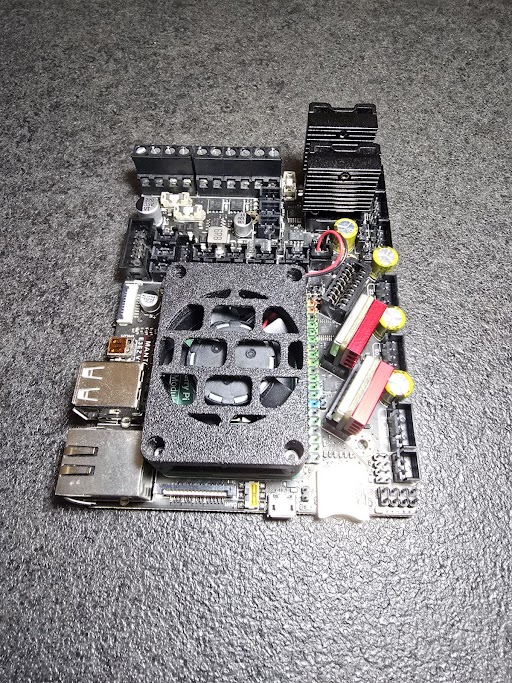
TMC5160 drivers on XY
TMC2209 drivers on Z and extrusion
MGN9H high-preload linear rails
GT1.5 high-temp belt system
Integrated Z lead screw system
Precision 16mm Z guide rods
HOTEND & BED
105W Microswiss high-temp hotend (USA)
Titanium heatbreak, CM2 nozzle
V6-compatible, abrasive-ready
Up to 350°C continuous / 360°C max
305mm VORON/LDO heated bed (600W)
10mm cast and milled aluminum
Max bed temperature: 120°C
LDO DarkRock PEI build surface
Integrated nozzle wiper
COOLING
CPAP 7040 high-pressure blower (WONSMART)
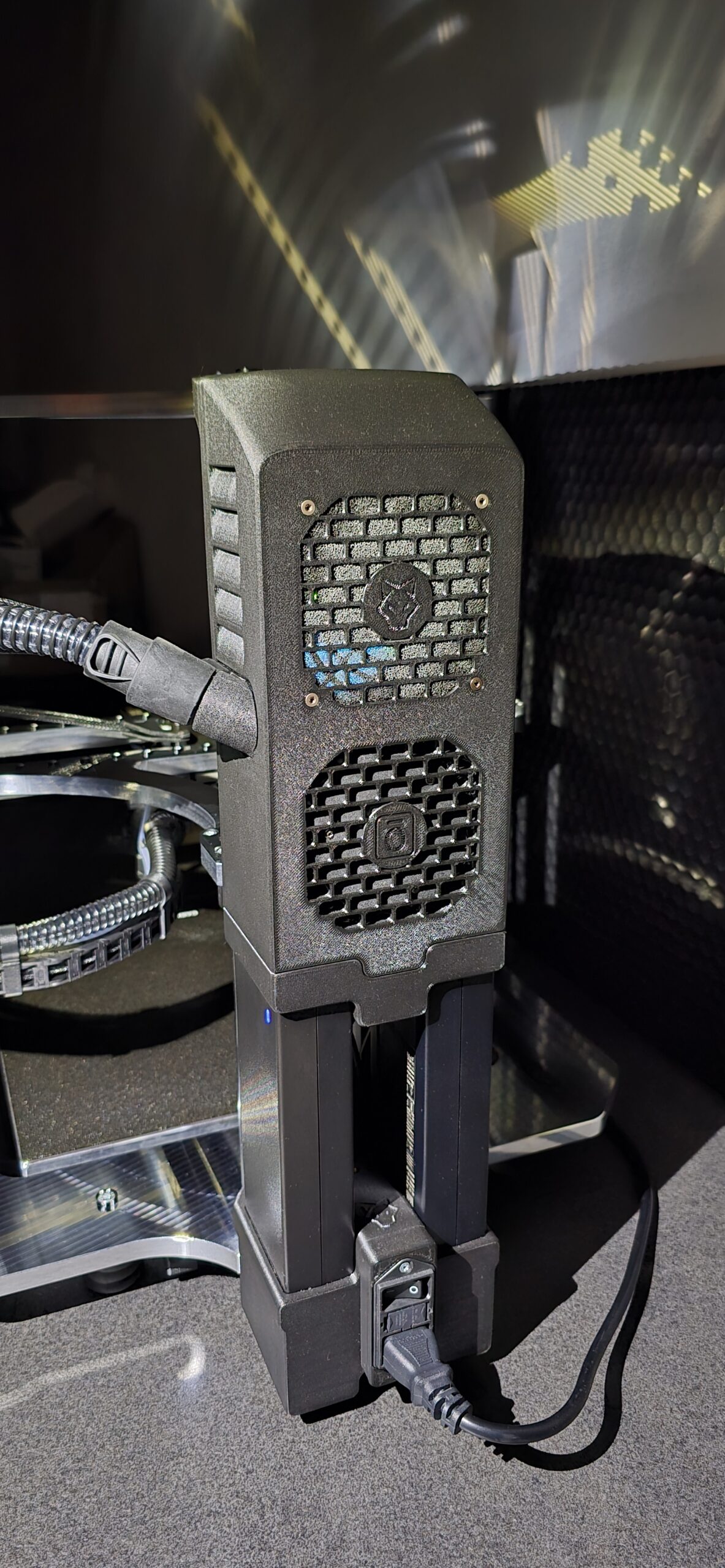
Remote silenced cooling box
High-flow toolhead cooling
Designed for enclosed operation
ELECTRONICS
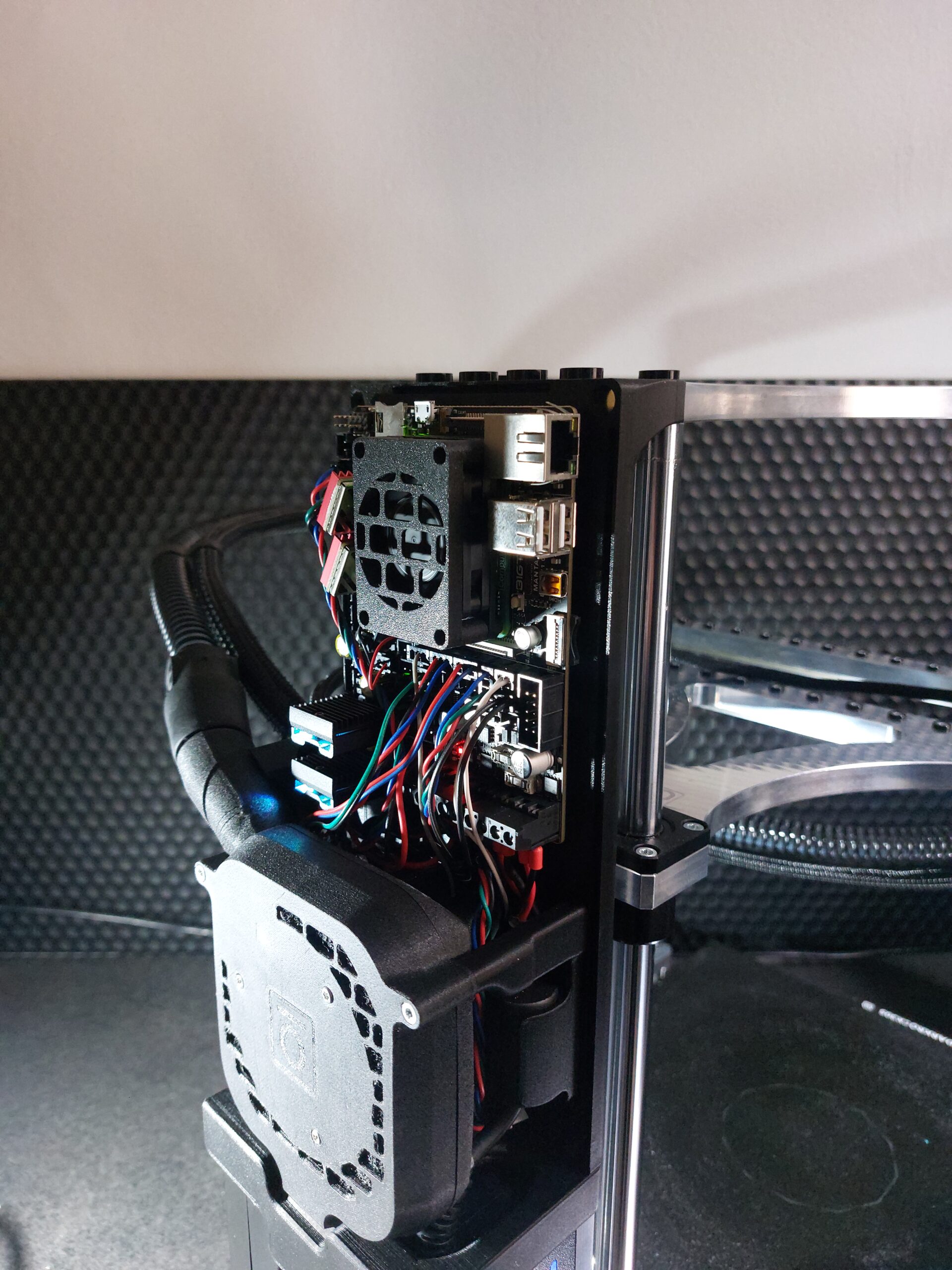
Raspberry Pi CM5 (4GB / 32GB SSD)
BTT Manta E3EZ controller
Mean Well industrial PSU
Schurter EMI filtered power input (dual fuse)
OMRON solid state relay
Emergency stop switch
Full IEC-standard wiring
HDMI / USB / Ethernet ports
RF disable option
CONNECTIVITY
WiFi hotspot setup from phone
QR-code onboarding
Ethernet support
Remote monitoring (Mobileraker compatible)
Any phone/tablet can act as display (KlipperScreen)
No SSH required
FIRMWARE (OPTIONAL FEATURES)
Base system is stock Klipper + Mainsail.
All advanced features are optional and can be disabled.
Performance Modes:
PROWL (quiet), HUNT (production), CHASE (max speed), RAW (unrestricted)
Flow Control:
Limits volumetric flow before extrusion to prevent jams.
Acceleration Control:
Hardware-enforced acceleration limits at motion planner level.
Sensorless Homing:
Automatic retry with tolerance checking.
STōN-PROBE:
Force-based bed leveling using load cell sensing.
Thermal Compensation:
Adjusts Z offset during warm-up.
Maintenance System:
Tracks print hours and triggers service reminders.
SAFETY
Multi-layer acceleration limiting (firmware + mode + planner)
Triple-redundant heater shutdown
Filament runout + tangle detection
Emergency stop switch
Thermal and motion safety enforcement
WHAT’S INCLUDED
Fully assembled STōN-WoLF printer
Pre-flashed Raspberry Pi CM5
Klipper + Mainsail setup
OrcaSlicer profiles
Microswiss hotend
PEI build plate
PSU + IEC power cable
Complete wiring harness
Sample filament
Setup documentation + QR onboarding
WHAT’S NOT INCLUDED
Display (use phone, tablet, or browser)
USB camera (optional)
Enclosure (coming soon)
Extra filament
Z600 OPTION (ask for availability and price)
Same machine, extended Z axis (600mm height).
Includes longer Z system, reinforced structure, and extended wiring.
Made to order.
OPEN SOURCE
Hardware: CC-BY-SA-4.0
Software: GPL-3.0
GitHub: github.com/STON-PRINTERS
Built on Klipper, Mainsail, OrcaSlicer, and open hardware ecosystems. Thank goodness.